As an Amazon Associate, Rack and Plate earns from qualifying purchases. Product links on this page are Amazon searches tagged with rackandplat0c-20. Disclosure.
Later upgrade
Rack, bench, and plates
This is not the first cart. If you already have adjustable dumbbells, floor mats, and a doorway or wall pull-up bar, stay there until you want squats and presses on a bar. The next buy is a power stand, not a full rack.
This shortlist is the later upgrade for a typical one-car garage or spare room with a standard ceiling, where you may not be able to bolt into the floor. It is not a commercial gym. Buy the rack when a stand is no longer enough: you want the bar caught inside four posts, a more stable bench station, and plate storage. Then buy one bench. Then buy plates in pairs.
Put floor mats down before you drop a bar or set the stand or rack in place. This page does not name a mat brand. Cover the floor the bar can hit.
A standard 7-foot Olympic bar, with 2-inch sleeves, is assumed. That is the usual men's Olympic bar. It is not a scored pick, and no bar model is named here. If you still need a bar, confirm sleeve diameter and sleeve length on that listing before you order plates.
Measure the ceiling, the door the rack has to walk through, and the patch of floor you can give up. Specs below come from manufacturer pages checked for this guide. Confirm them on the current listing. Price is not listed here. Nobody at Rack and Plate is claiming to have used a particular unit.
1. Rack, when a stand is not enough
A full rack is what makes heavy squats and bench possible without a spotter, because the safeties sit inside the posts. Buy it after the dumbbells and after a power stand, and before the bench and the plates. The floor choice is flat-foot vs bolted.
Pick a flat-foot rack if you cannot bolt into the floor. That is the default for this room. Pick a bolted rack only if you can put anchors into concrete or a platform you are willing to drill. A bolted rack uses less floor. A flat-foot rack stands on a wider base and you can move it later.
Default later rack · no bolt
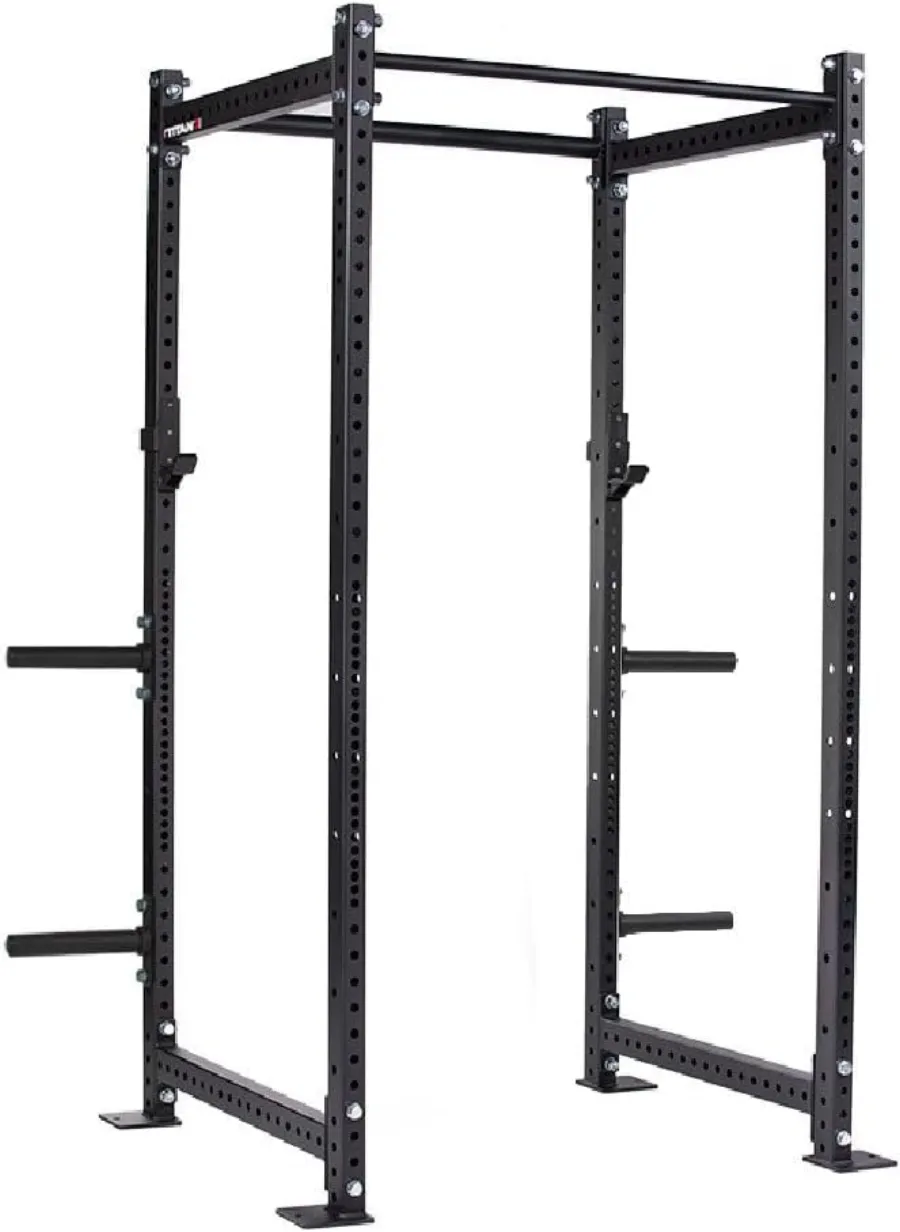
Titan Fitness X-3 Series Flat Foot Power Rack
What it is: a four-post power rack with a flat-foot base. Titan sells it as a no-bolt setup, with 3 by 3 inch, 11-gauge steel uprights. The product page lists 82-inch and 91-inch heights. On the 82-inch model, Titan lists a 50 by 48 inch footprint and 30 inches of inside depth. The box includes J-hooks and two pull-up bars, a 1.25-inch bar and a 2-inch bar. Plate holders are optional.
Who it is for: a garage or spare room where you may not drill the floor, and where a power stand is no longer enough. That includes a rental, a finished floor, or a slab you do not want holes in.
Confirm on the listing: the height against your ceiling, including pull-up clearance. Titan lists an 82-inch overall height and a 77-inch max pull-up height on the shorter model. Also confirm that pin-and-pipe safeties are in the carton. On Titan's page they are sold as accessories, not as included parts. Confirm stock and price there too. Check the current listing.
Skip this if a power stand still covers your squats, presses, and pull-ups, or if you can bolt a rack down and you need a smaller footprint. The listed 50 by 48 inch base eats more floor than a bolt-down cage.
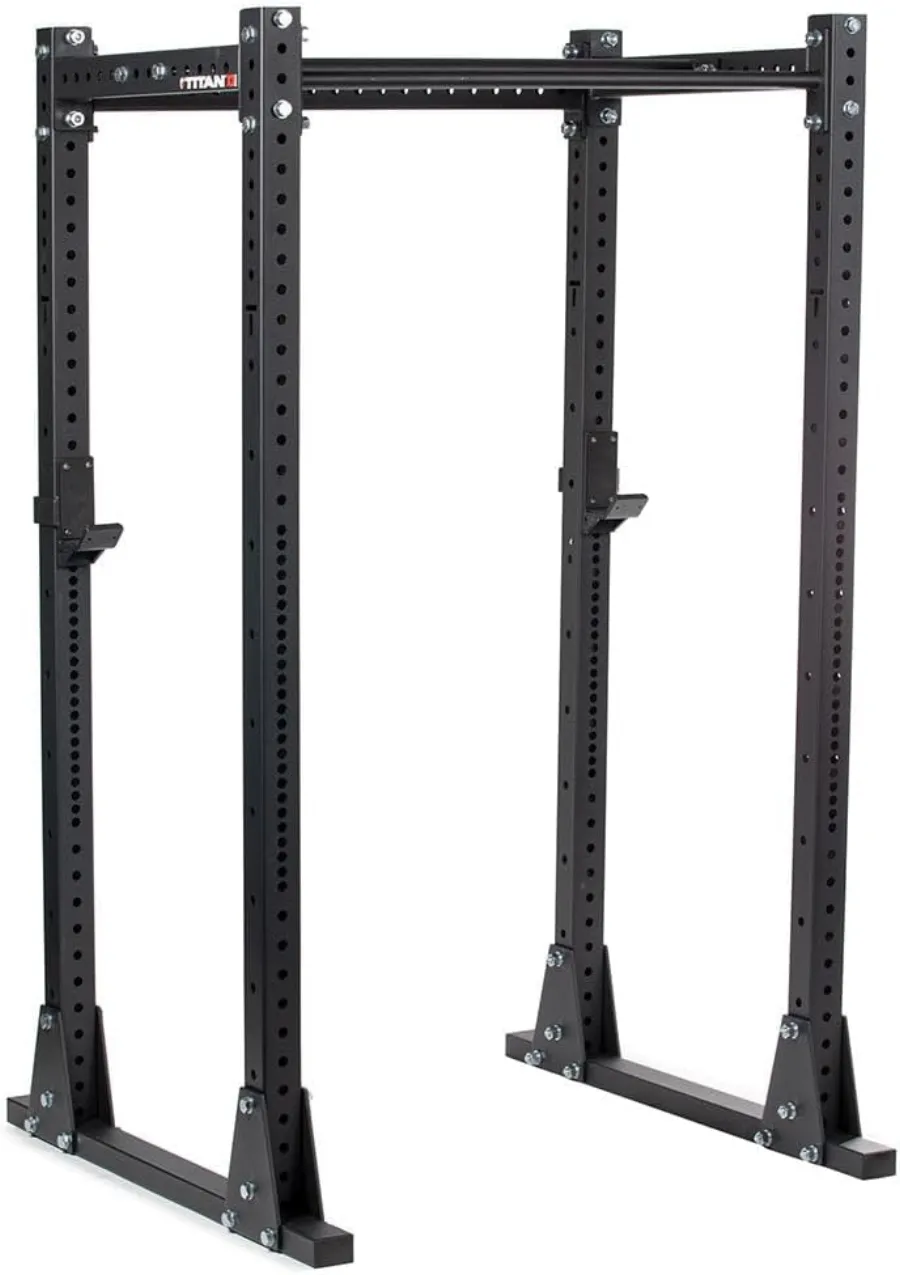
What it is: Titan's bolt-down power rack, built with 2 by 3 inch, 11-gauge steel uprights. Titan recommends bolting it down for added stability. The series is sold in 82-inch and 91-inch heights, and in 24-inch and 36-inch depths. On the 82-inch, 24-inch-depth listing, Titan lists a 54 by 32.75 inch footprint and 24 inches of inside depth. That page includes J-hooks and the same two pull-up bars, 1.25-inch and 2-inch. Plate holders are optional.
Who it is for: an owner who can anchor the rack into a concrete garage floor or a platform, and who wants the narrower base, after a stand is no longer enough.
Confirm on the listing: which height and depth you are actually looking at. Those change the footprint. Confirm whether safeties are in the box. They are not listed as included on the manufacturer page for this rack. Confirm that you can bolt it, and confirm the current price. Check the current listing.
Skip this if you cannot drill the floor. Do not treat the T-3 as a freestanding rack. Titan's own note is to bolt it down.
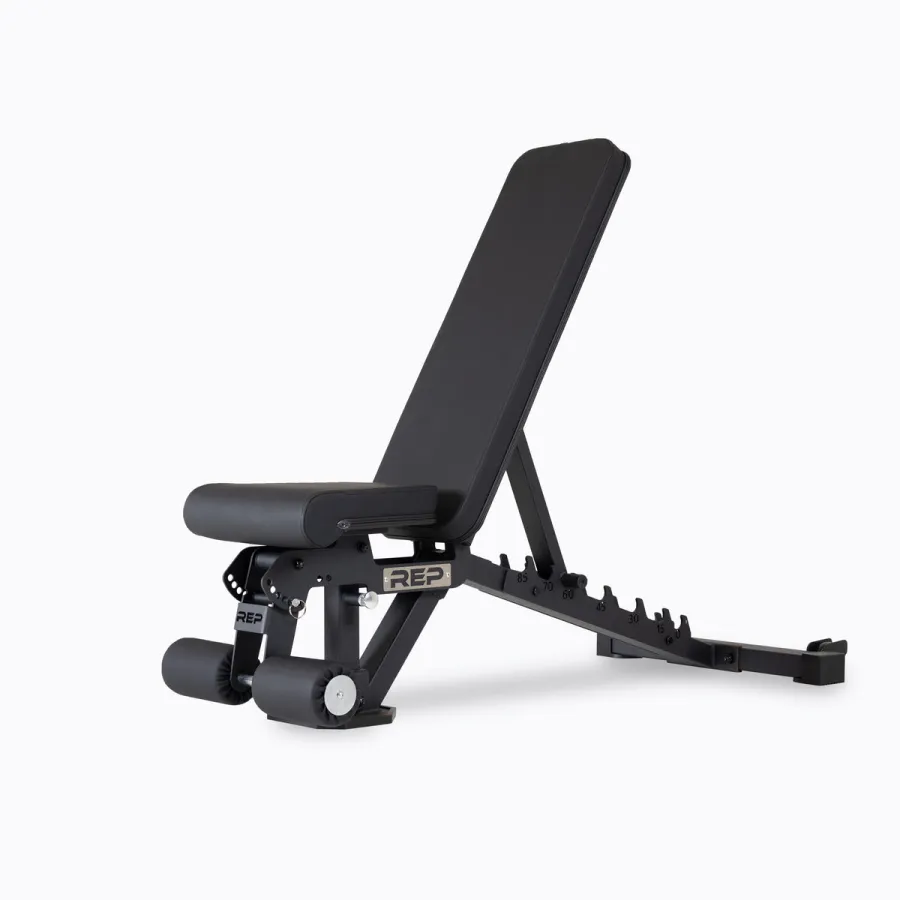
What it is: a flat, incline, and decline bench. REP lists it at a 1,000-pound capacity, on an 11-gauge steel frame, 17.1 inches high, 56.6 inches long, and 25.8 inches wide. It has a ladder for the back pad, a seat that changes angle, and built-in leg rollers for decline. REP says it cannot be stored vertically.
Who it is for: a room with space for one bench, where you want incline work without buying a second bench.
Confirm on the listing: that the 56.6-inch length still leaves a walkway beside the rack, the stated capacity, and whether the pad and wheels match the photos. The REP page can show pre-order. Check the current listing for stock and price.
Skip this if you only press flat and you need the bench to stand on end between sessions. This one does not store vertically.
Buy plates last, and buy them in pairs. How many pairs depends on what you already lift. This page does not invent a set total or a price. Confirm whether the listing is a pair or a boxed set, and that the center hole is for a 2-inch Olympic bar.
Iron if you set the bar down. Bumpers if the bar will hit the floor. Do not mix the two on the same bar. REP says the diameters can differ, and a drop then loads the larger plate. Put floor mats down before a bumper hits the floor. A bumper does not make bare concrete a good place to dump the bar.
Iron · set the bar down
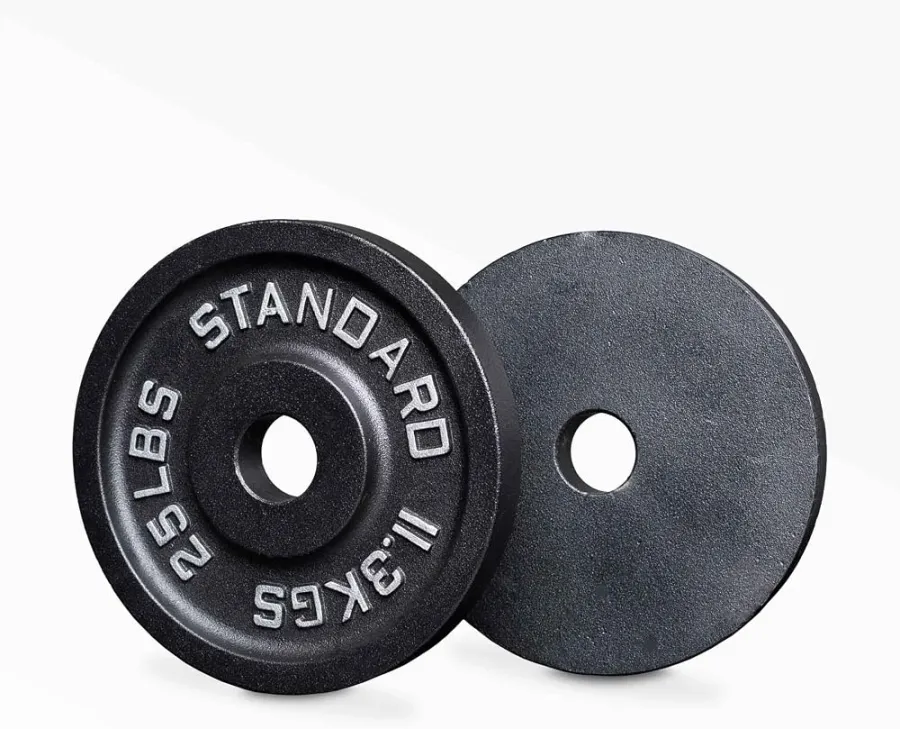
REP Old School Iron Plates
What it is: cast-iron Olympic plates, one-sided, with a deep lip. REP sells them in pairs, and also as sets. The listed center hole is 52 mm, which REP says fits Olympic barbells. The listed weight tolerance is 3 percent. REP says not to drop iron plates. They can damage the bar, the plates, and the floor.
Who it is for: squats, presses, and deadlifts you set down, in a room where the clang is fine and nobody is living under the floor.
Confirm on the listing: pair versus set, the hole size, and shipping weight if you need to plan the delivery. Check the current listing. Do not take a price from this page.
Skip iron if you drop deadlifts, train on bare concrete, or share a floor with someone under the room.
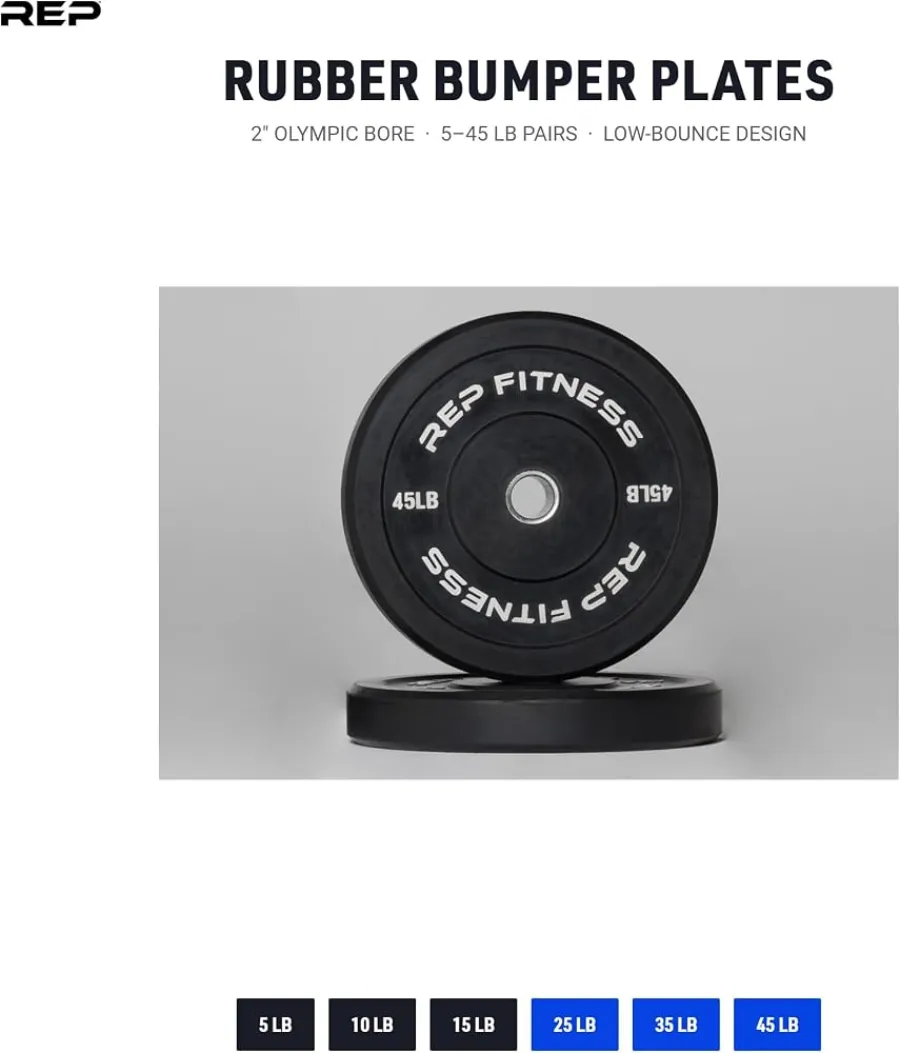
What it is: black rubber bumper plates with steel inserts, sold in pairs. REP says they fit Olympic 2-inch barbells, and lists a 1 percent weight tolerance. They are the plate style built to be dropped. REP still says to use flooring with some give, such as mats or a platform, if you drop them.
Who it is for: deadlifts that hit the floor, or a spare room with someone under you. Mats go down first.
Confirm on the listing: pair versus set, diameter, and that you are not looking at a change-plate size that will not protect the bar on a drop. Check the current listing.
Skip bumpers if you never drop the bar. Iron is the pick when you set the bar down.
What to skip until the rack, bench, and plates are in
A second specialty bar, a landmine, bands, and any multi-station machine. They are easier to judge once you know how much floor the rack and bench actually use. Do not buy them ahead of the dumbbells, the mats, or the power stand.