Before the stand, before a drop
Floor mats
Have mats down before a power stand arrives, and before you drop a dumbbell or a plate. This is a small add after the dumbbells. If mats are already down, do not shop a brand.
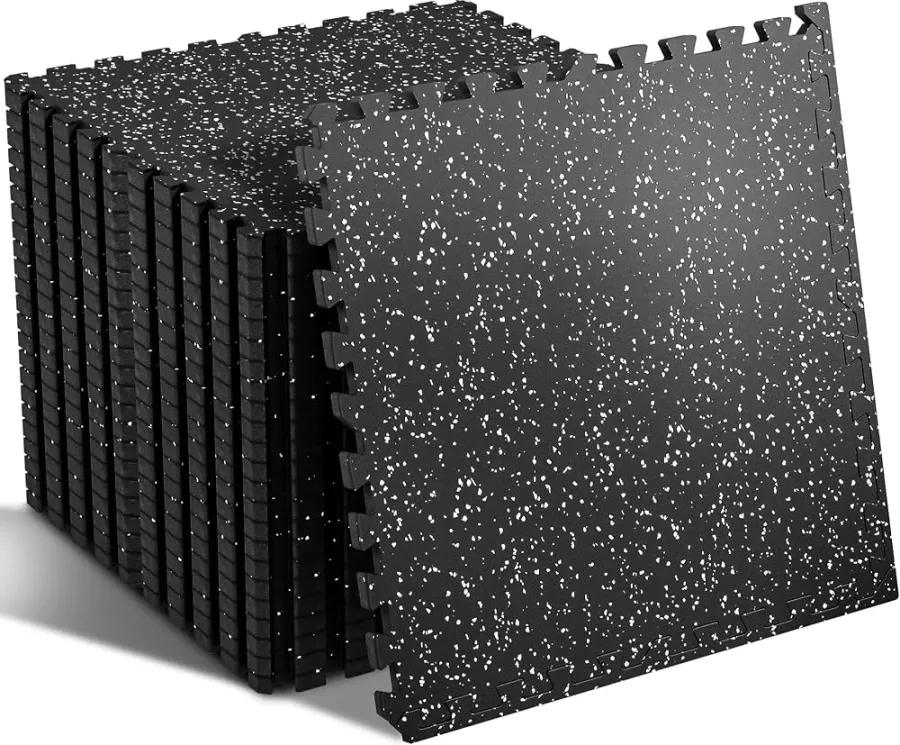
What this usually costs: typical street ranges as of Sep 2026, not a quote. Check the current listing. A first interlocking tile pack that covers a stand footprint is often about $100 to $200. A full-room rubber roll is more, often about $280 to $380 for a 15 by 4 foot roll. This page does not name a mat brand. Buy the patch you need, not a full room, until the stand is placed.
A stand, a loaded bar, and a dumbbell that misses the tray will mark concrete and dent a finished floor. Mats are the layer under that. They are not a later accessory. Put them down first, then set the stand on them, then train.
This page does not name a mat. No brand is listed because none was checked for this guide. If you already have mats in the room, use the checks below on the mats you have. Buy more only if the patch is short, the seams open, or the rubber slides. Do not replace a working set because a listing looks thicker in a photo.
What “down” means
- The whole base of the stand, plus a step past the feet. On the tall squat stand named on the power stand page, Titan lists a 47 by 48 inch base. Cover that, and the walkout in front of it, not just the two uprights.
- The place a dumbbell lands if a set ends early. That includes beside the trays, not only under them.
- The bench area, if a bench comes later. A bench that rocks on a seam is a later problem you can avoid now.
- A path you can walk with a bar in your hands. A curled edge or a loose tile is a trip with the bar off the hooks.
What to check on the mats you have
Coverage first. A mat under the dumbbell trays does not count as a mat under a stand you have not placed yet. Lay out the footprint before the box arrives. If the patch stops at the uprights, extend it. A dropped plate will find the bare floor at the edge of the last tile.
Seams next. Interlocking tiles can gap. A plate or a stand foot on a seam sits on two pieces that can shift. Tape is a temporary fix, not a plan. A single roll avoids seams and is harder to move. Either can work. Confirm how the piece joins, and whether it will stay put on your floor.
Thickness is on the listing, if you are buying. This page does not set a required thickness. Thicker rubber is the usual pick under a bar you set down hard. Thinner rubber can be enough under dumbbells you set into a tray, until something misses. Confirm the listed thickness, and whether the listing is one tile, a pack, or a roll. Do not invent a set total here.
Then the floor itself. Concrete in a garage can take rubber and still show a stain or a chip if the mat is thin and you drop iron. A finished spare-room floor needs the mat more, and it may not like a plastic smell in a closed room. Air the mats out before you live with them. If they slide on a smooth floor, the stand can walk with them. Check that before you load a bar onto the hooks.
The doorway lip matters once a bar is in play. A raised edge at the threshold will catch a foot on a walkout. Cut or arrange the mat so the walkout is flat. Do not stack loose offcuts under the stand feet.
Who should buy mats, and who should not
Buy mats if the floor under the future stand is bare, or if the mats you have cover only the dumbbell corner. Buy them before the stand, not after the first dropped handle.
Do not buy mats if the room is already covered through the stand footprint, the walkout, and the drop beside the dumbbells, and the pieces do not slide or gap. Spend that money on the power stand, or leave it until the stand tells you the patch is short.
Rubber under a bumper plate is still required if you drop the bar. A bumper does not make bare concrete a landing. That note is also on iron vs bumper. This page still does not name a mat brand, and it does not name a plate brand.
Amazon search link (Associates tag rackandplat0c-20): amazon.com/s?k=rubber+floor+mats
That search is a category link, not a named pick. Use it only if the patch you have is short. Confirm thickness, coverage, and whether the listing is a tile pack or a roll.